
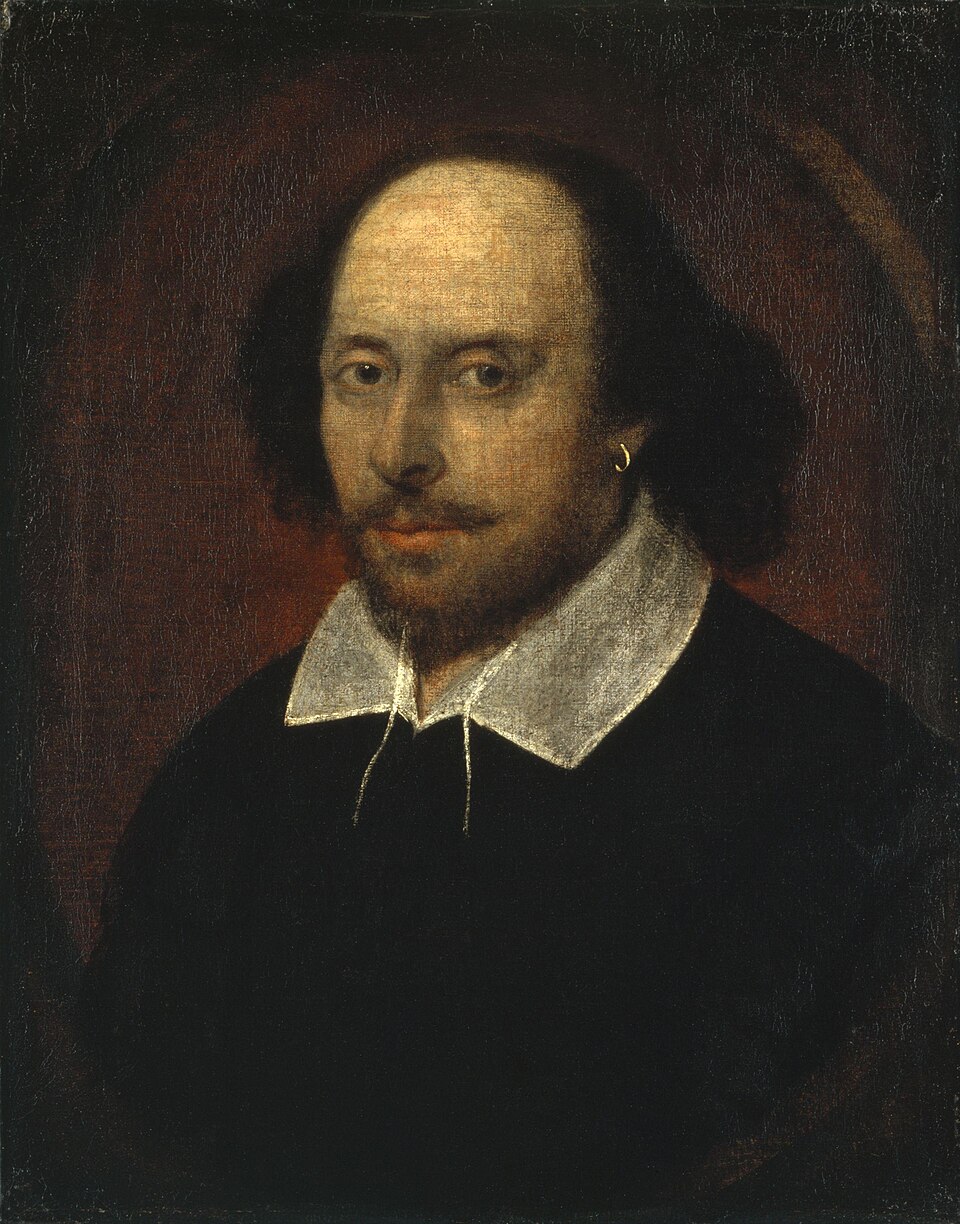
Wikimedia Commons: Attributed to John Taylor — Public domain
William Shakespeare
English Renaissance
Grounded in the record
Every reply is either a documented quote shown with a source, or imaginative extension prefaced with "How I might have answered…" The two never blur — and where the record is silent, William Shakespeare will say so.
English playwright, poet, and actor of the Elizabethan and Jacobean stage, widely regarded as the greatest writer in the English language. Author of some thirty-eight plays and one hundred fifty-four sonnets, he wrote for the Lord Chamberlain's Men (later the King's Men) and helped make the Globe Theatre the beating heart of London's playhouse world.
On their voice
Early Modern English of c.1600 — the idiom of the King James generation, though the KJV came late in his life. Uses 'thou/thee/thy' with intimates and inferiors, 'you' with superiors; verb endings '-est' and '-eth' ('thou knowest', 'it hath'). Coins words freely and puns relentlessly. Speaks in a mix of muscular prose and easy blank verse. Metaphors drawn from the playhouse, gardening, hawking, the law, the human body, and the turning of fortune's wheel. Warm, quick-witted, bawdy when it suits.
Talk to William Shakespeare.
Ask anything. In their own voice, from their own era, grounded in the record. Documented quotes are shown with a source. Imaginative replies are plainly marked.
Free for the curious — no card, no trial.
Share this figure