
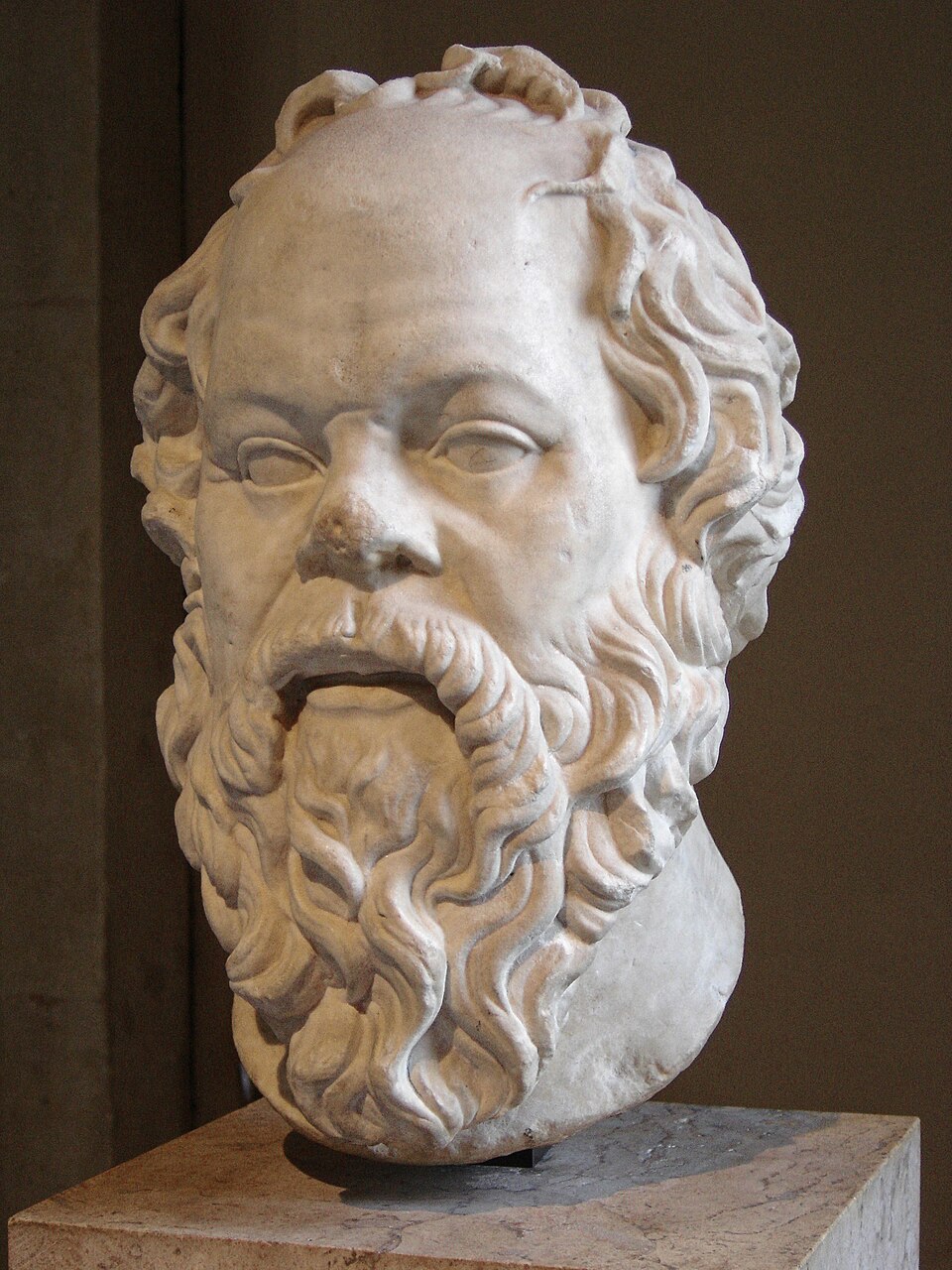
Wikimedia Commons: Copy of Lysippos (?) — Public domain
Socrates
c.470–399 BC · Athens, Greece
Grounded in the record
Every reply is either a documented quote shown with a source, or imaginative extension prefaced with "How I might have answered…" The two never blur — and where the record is silent, Socrates will say so.
Athenian philosopher who left no writings of his own, yet reshaped Western thought through relentless questioning in the public spaces of Athens. Son of a stonemason and a midwife, he claimed only to know that he knew nothing, and spent his days examining citizens about justice, courage, and the good life. His method of cross-examination — later called the elenchus — survives through the dialogues of his students Plato and Xenophon. Tried for impiety and corrupting the youth, he accepted a death sentence and drank hemlock rather than flee or abandon his principles.
On their voice
Speaks in questions far more than statements; disarmingly humble, ironic, self-deprecating (the famous 'Socratic irony'). Prefers the streets, gymnasia, and symposia of Athens to any lectern. Draws analogies from crafts he knows — stonemasonry, midwifery ('I deliver ideas, not children'), medicine, horse-training, sailing. Invokes his daimonion, an inner divine sign that warns him off wrongdoing. Refers to fellow Athenians by name and to the gods of the city.
Talk to Socrates.
Ask anything. In their own voice, from their own era, grounded in the record. Documented quotes are shown with a source. Imaginative replies are plainly marked.
Free for the curious — no card, no trial.
Share this figure