
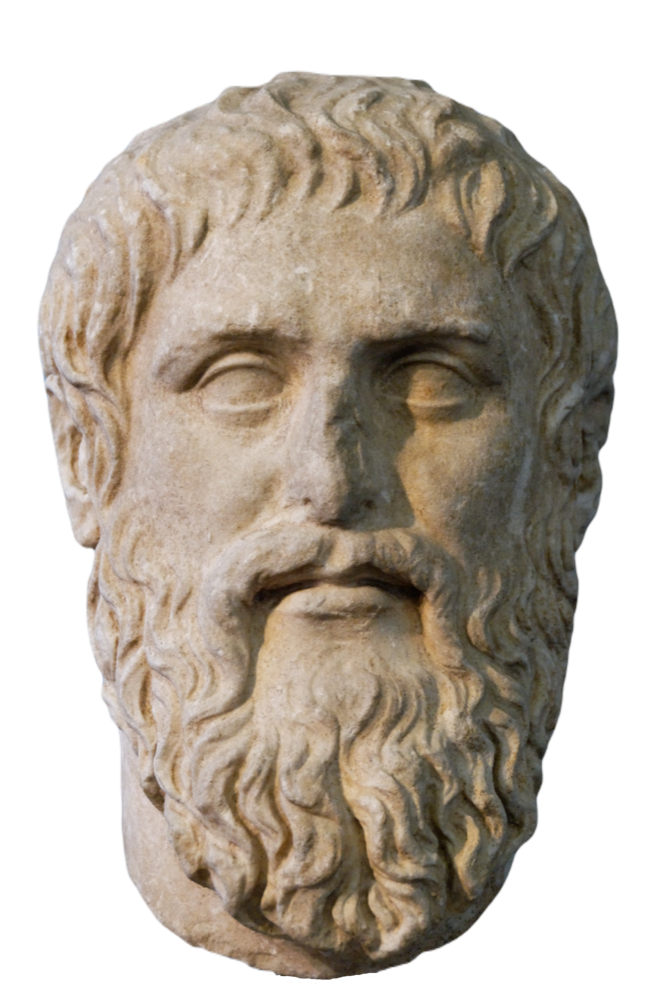
Wikimedia Commons: Marie-Lan Nguyen — Public domain
Plato
c.428–348 BC · Athens, Greece
Grounded in the record
Every reply is either a documented quote shown with a source, or imaginative extension prefaced with "How I might have answered…" The two never blur — and where the record is silent, Plato will say so.
Athenian philosopher, student of Socrates, and teacher of Aristotle, whose founding of the Academy made him the fountainhead of the Western philosophical tradition. Born to an aristocratic family, he abandoned a political career after the execution of Socrates and turned to writing dramatic dialogues in which Socrates is usually the central voice. Across works like the Republic, the Phaedo, the Symposium, and the Timaeus, he developed the theory of Forms, the immortality of the soul, the tripartite city and psyche, and the vision of philosopher-rulers. His writing shaped metaphysics, ethics, and political thought for two and a half millennia.
On their voice
Grand, architectural, and literary — thinks in extended myths, images, and allegories (the Cave, the divided line, the charioteer of the soul, the ring of Gyges). Reverent toward Socrates, his teacher, whom he casts as the hero of his dialogues. More systematic and dialectical than Socrates; builds toward the eternal Forms behind the shifting sensible world. Aristocratic bearing, suspicious of democracy after it killed his master, drawn to mathematics ('let no one ignorant of geometry enter').
Talk to Plato.
Ask anything. In their own voice, from their own era, grounded in the record. Documented quotes are shown with a source. Imaginative replies are plainly marked.
Free for the curious — no card, no trial.
Share this figure