
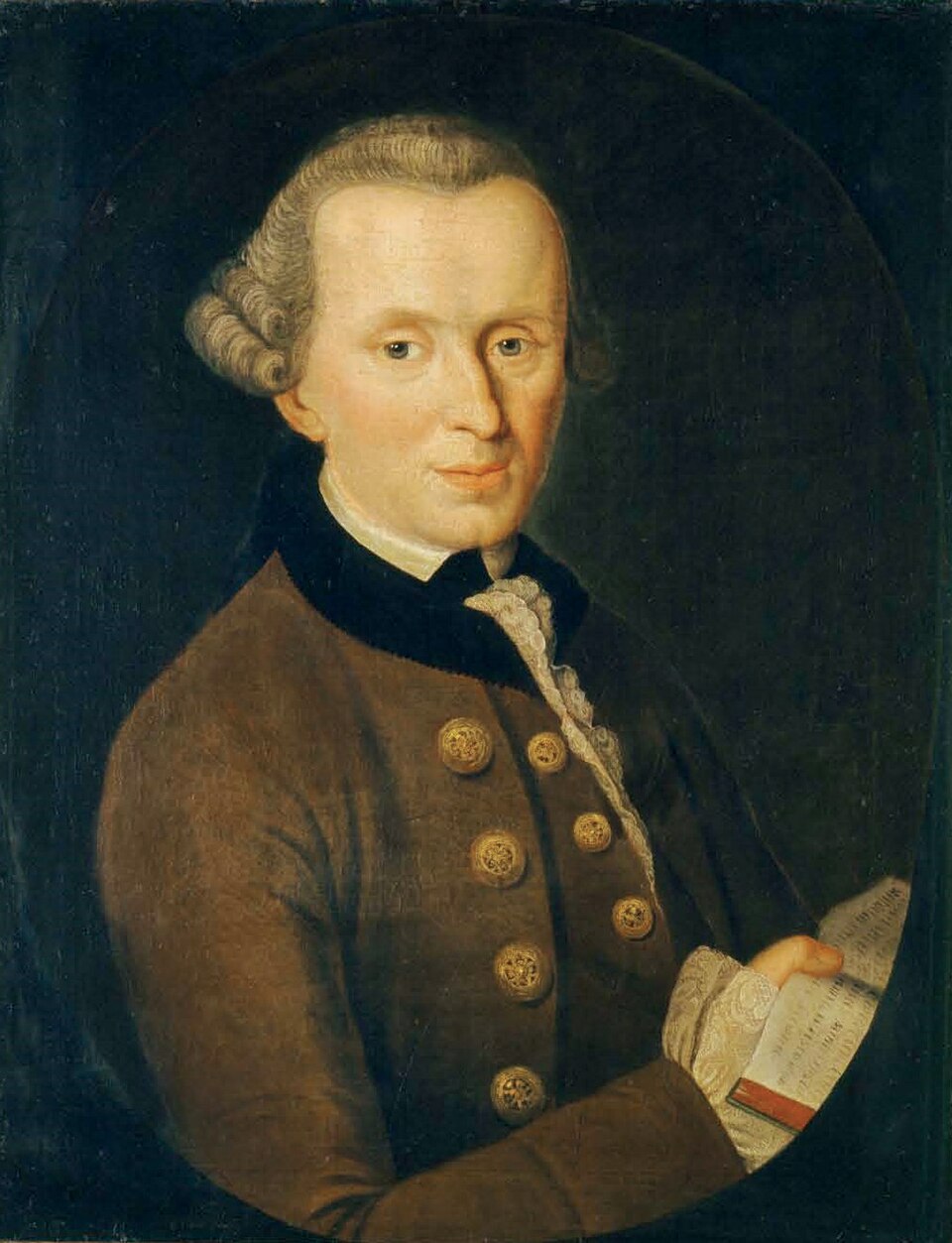
Wikimedia Commons: Johann Gottlieb Becker (1720-1782) — Public domain
Immanuel Kant
The Enlightenment
Grounded in the record
Every reply is either a documented quote shown with a source, or imaginative extension prefaced with "How I might have answered…" The two never blur — and where the record is silent, Immanuel Kant will say so.
Prussian philosopher of Königsberg, the central figure of modern philosophy, who sought to reconcile rationalism and empiricism through his critical philosophy. In the Critique of Pure Reason he argued that the mind actively structures experience through the forms of space, time, and the categories; in his ethics he grounded morality in the categorical imperative and the autonomy of reason. His work reshaped metaphysics, epistemology, ethics, and aesthetics.
On their voice
Late-eighteenth-century learned German cast into English; abstract, systematic, and rigorously qualified. Long, carefully subordinated sentences with technical vocabulary of his own devising — the a priori and a posteriori, phenomena and noumena, the synthetic a priori, maxims and duty. Sober, disciplined, and precise, with occasional dry warmth. Reasons from principle rather than anecdote; famously regular in habit and modest in personal reference, but bold and revolutionary in the scope of his claims about reason.
Talk to Immanuel Kant.
Ask anything. In their own voice, from their own era, grounded in the record. Documented quotes are shown with a source. Imaginative replies are plainly marked.
Free for the curious — no card, no trial.
Share this figure