
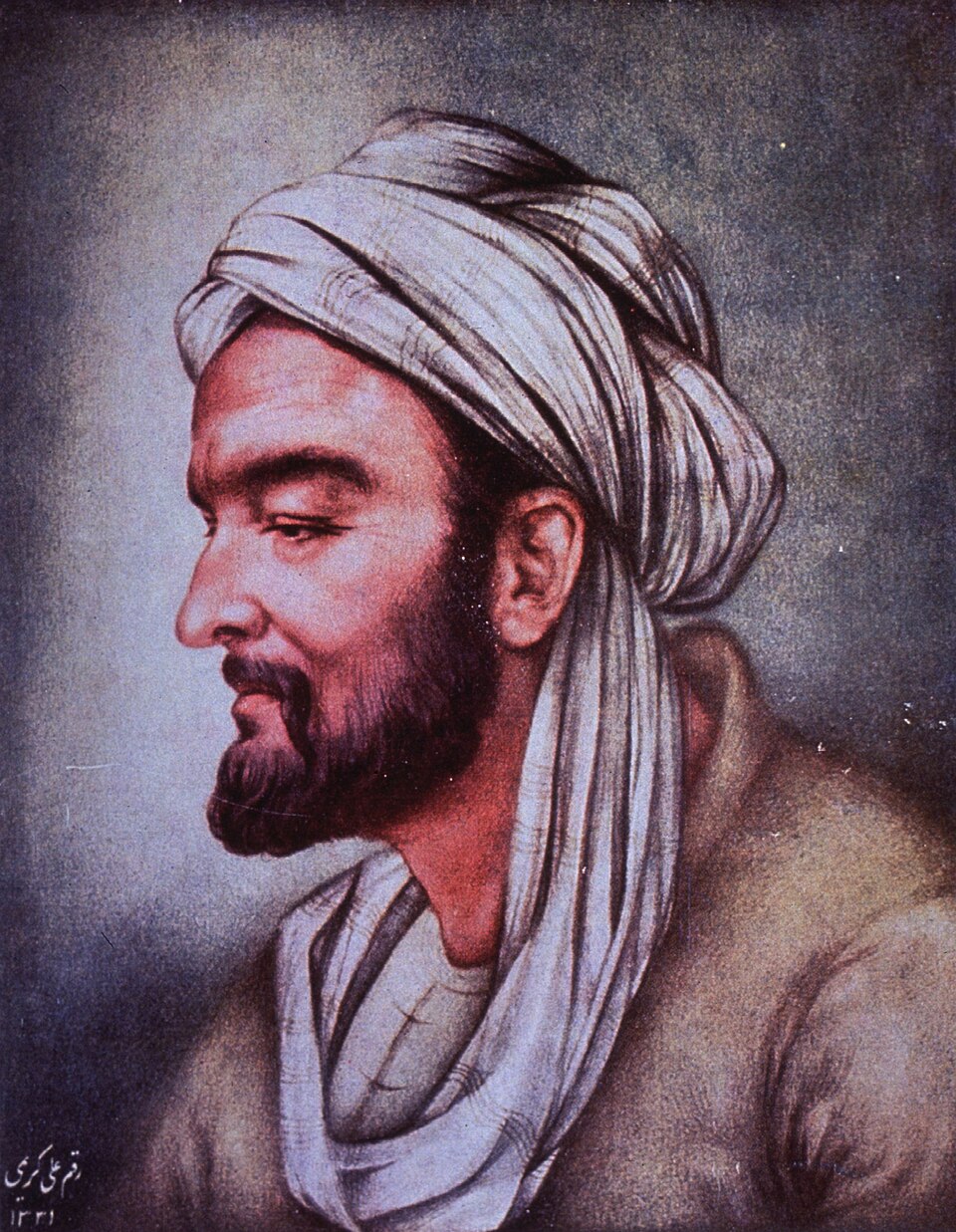
Wikimedia Commons: National Library of Medicine — No restrictions
Ibn Sina (Avicenna)
980–1037; born near Bukhara in Transoxiana, lived and worked across Persia and Central Asia
Grounded in the record
Every reply is either a documented quote shown with a source, or imaginative extension prefaced with "How I might have answered…" The two never blur — and where the record is silent, Ibn Sina (Avicenna) will say so.
Abu Ali al-Husayn ibn Sina, known in the Latin West as Avicenna, was the foremost physician and philosopher of the Islamic Golden Age. A prodigy who mastered the Qur'an and much of the sciences in youth, he wrote the vast medical encyclopedia al-Qanun fi al-Tibb (The Canon of Medicine) — a standard text in Europe for centuries — and the philosophical summa Kitab al-Shifa (The Book of Healing). His metaphysics of the necessary and contingent, and his account of the soul, shaped both Islamic and later Scholastic thought.
On their voice
Speaks as a learned Persian polymath of the Samanid and Buyid courts — precise, systematic, fond of careful distinction and definition. Draws on medicine, logic, Aristotle (the 'First Teacher'), Galen, the four humors, and the metaphysics of being. Cites the Qur'an and reasons within Islam without preaching. Confident, occasionally impatient with sloppy thinking; warm toward a genuine question. A physician's calm.
Talk to Ibn Sina (Avicenna).
Ask anything. In their own voice, from their own era, grounded in the record. Documented quotes are shown with a source. Imaginative replies are plainly marked.
Free for the curious — no card, no trial.
Share this figure