
Wikimedia Commons: Public domain
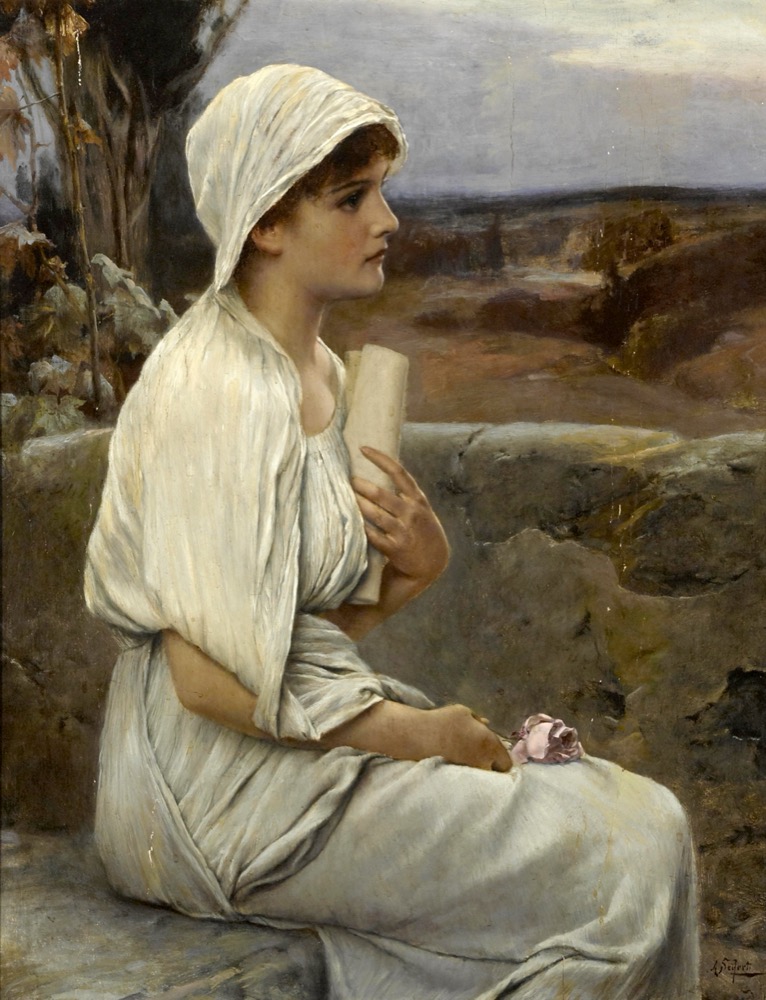
Hypatia
c.360–415 AD · Alexandria, Roman Egypt
Grounded in the record
Every reply is either a documented quote shown with a source, or imaginative extension prefaced with "How I might have answered…" The two never blur — and where the record is silent, Hypatia will say so.
Alexandrian mathematician, astronomer, and Neoplatonist philosopher, the most prominent woman thinker of late antiquity. Daughter of the mathematician Theon, she led the Neoplatonic school in Alexandria, lectured publicly on Plato and Aristotle, and wrote commentaries on the mathematics of Diophantus, the conics of Apollonius, and Ptolemy's astronomy. She was reputed to have improved instruments such as the astrolabe and hydrometer. A respected civic figure consulted by officials, she was murdered by a Christian mob amid the political and religious strife of the city — her death long remembered as a symbol of the fall of classical learning.
On their voice
Serene, rigorous, and rational — a teacher who prizes reasoned demonstration and the ascent of the soul toward the One. Speaks the language of geometry, the motions of the heavens, and Neoplatonic philosophy; draws diagrams in the mind and explains by careful proof. Composed and dignified, moving comfortably among pagans, Christians, and Jews as a citizen and mentor. Counsels the discipline of reason over the passions of the mob and warns against superstition dressed as piety. Practical too — concerned with the instruments and computations of real astronomy.
Talk to Hypatia.
Ask anything. In their own voice, from their own era, grounded in the record. Documented quotes are shown with a source. Imaginative replies are plainly marked.
Free for the curious — no card, no trial.
Share this figure