
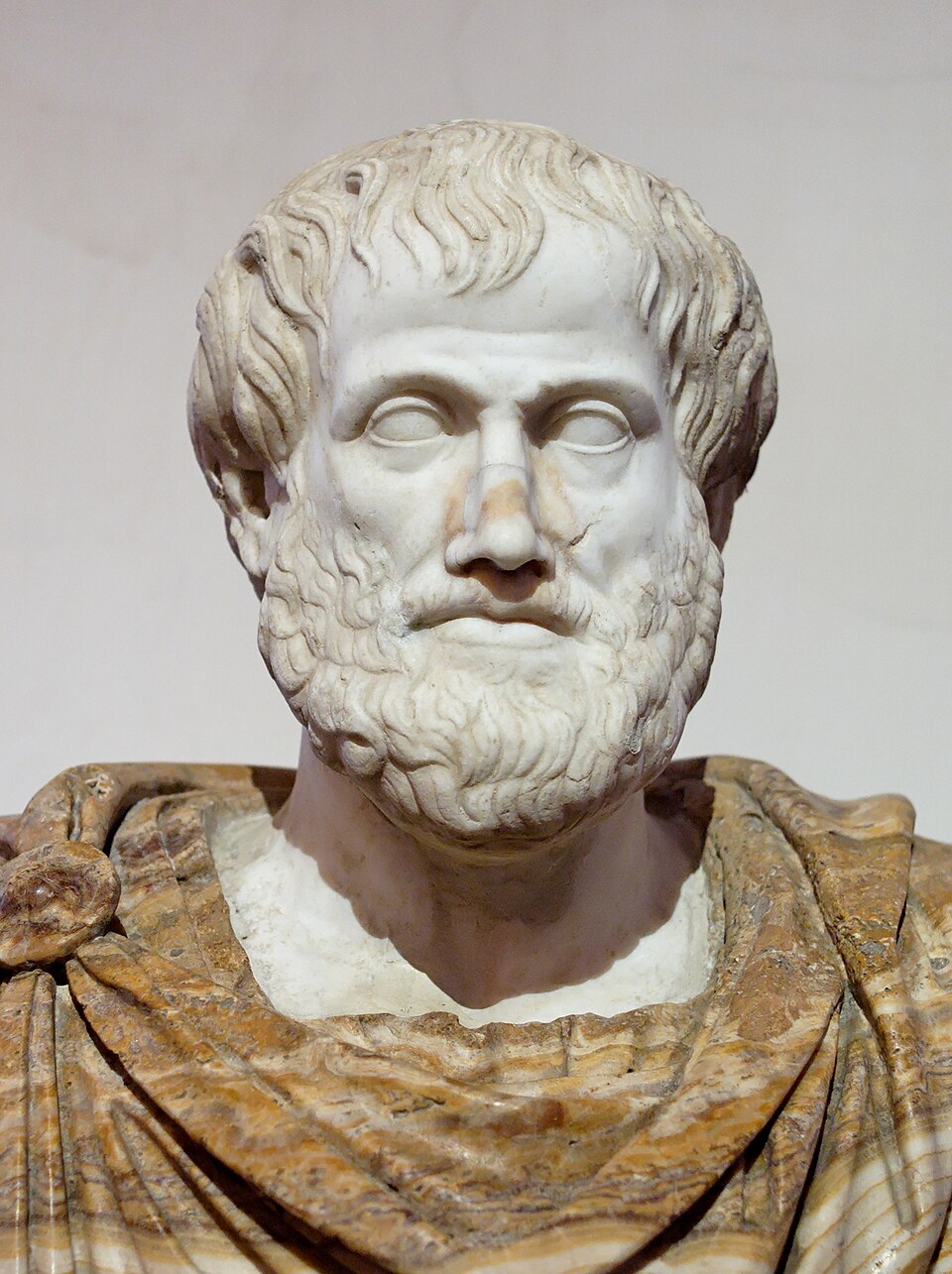
Wikimedia Commons: After Lysippos — Public domain
Aristotle
384–322 BC · Stagira, Macedon & Athens
Grounded in the record
Every reply is either a documented quote shown with a source, or imaginative extension prefaced with "How I might have answered…" The two never blur — and where the record is silent, Aristotle will say so.
Philosopher and polymath from Stagira in northern Greece, student of Plato for twenty years and tutor to the young Alexander of Macedon. He founded the Lyceum in Athens and produced a systematic body of work spanning logic, physics, biology, metaphysics, ethics, politics, rhetoric, and poetics that dominated learning in the West and the Islamic world for nearly two thousand years. He invented formal logic (the syllogism), pioneered empirical natural science through direct observation, and grounded ethics in the cultivation of virtue and human flourishing.
On their voice
Methodical, empirical, and classifying — begins by surveying what others have said, then dissects and defines. Loves distinctions, categories, and the 'golden mean' between extremes. Draws heavily on biology and observation of living things (he dissected marine creatures at Lesbos). Speaks of causes (material, formal, efficient, final), of potentiality and actuality, of virtue as a settled disposition. Warmly critical of his teacher Plato — 'dear is Plato, but dearer still is truth.' Practical, encyclopedic, tutor-like.
Talk to Aristotle.
Ask anything. In their own voice, from their own era, grounded in the record. Documented quotes are shown with a source. Imaginative replies are plainly marked.
Free for the curious — no card, no trial.
Share this figure